
In the Tamarack neighbourhood of Edmonton, Alta., what began as a simple after-school club for two junior youth has, in just over a year, blossomed into a vibrant pattern of community life.
In 2024, a young Bahá’í teacher hoped to begin working at an elementary and junior high school. During a job interview, she spoke about her experience with the junior youth spiritual empowerment programme while discussing challenges faced by eighth-grade students. The principal she spoke with was very interested, seeing how it could empower the students under his charge to be active agents of change in their community. She soon secured the position, on condition that she bring the programme to the school.
The programme began modestly with two junior youth who formed an after-school club, with the teacher serving as an animator. However, from the outset, the principal encouraged the junior youth to think about everyone they knew.
They thought about how to engage the entire school, and realized that service projects, a natural part of the programme, would be a way to do so. This led to all 1,200 students, including all 350 junior youth in the neighbourhood, taking part in a garbage cleanup. The principal blocked out time for all classes so that they could attend. Later, they made and delivered cards for seniors.
This approach helped the junior youth programme take root, growing to 72 weekly participants. Word also spread naturally among students, teachers, and families connected to the school. Now, the junior youth naturally think about the well-being of the entire school. “Why wouldn’t we include everyone?” they say when asked. However, there was an urgent need for more animators to accommodate all the junior youth.
The teacher consulted with Bahá’í institutions, and it was decided that rather than importing help, a parent gathering should be called. The question of how to work with large numbers was posed to the parents and the junior youth. It was no longer, “How do I run this programme?” but “How is our community learning to respond to its own needs?” This shift in orientation became foundational, opening possibilities that would not have emerged otherwise. Several parents stepped up to help, and together they decided that the Grade 9s—the oldest among the junior youth—would take on some of the responsibilities of animators.
In May of 2025, three high school students who frequented the basketball courts became interested in the programme and started serving as animators. They studied Ruhi Book 1: Reflections on the Life of the Spirit and connected with their life’s purpose, increasing their motivation to serve. Being of service had a profound impact on these youth, unlocking the programme’s potential for individual and social transformation.
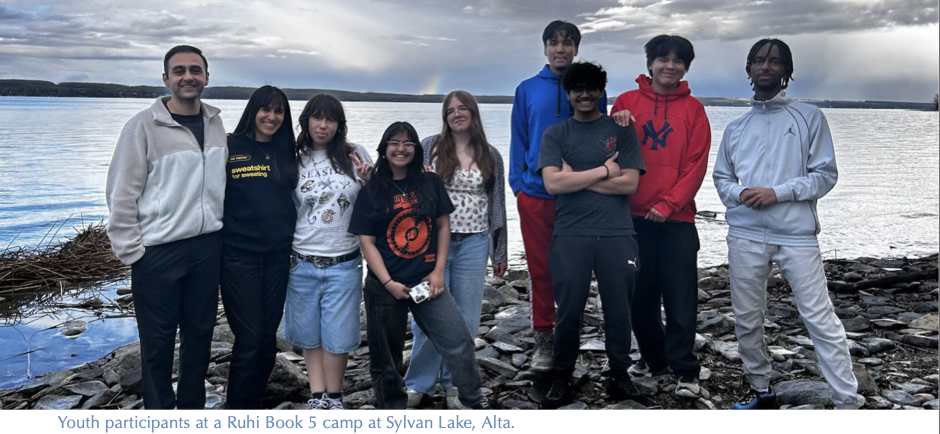
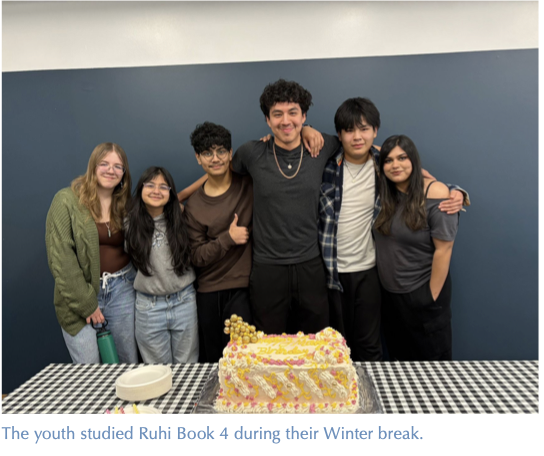
By October 2025, a year into the process, the Grade 9s had graduated to Grade 10 and now attended a local high school. This group of about 15 youth became the core animators. Over the course of several days, they studied the first unit of Ruhi Book 5: Releasing the Powers of Junior Youth, deepening their understanding of the characteristics of youth. Inspired by insights gained from studying this text, they began planning summer camps for the junior youth group. They also set a goal of advancing their study of the Ruhi Institute materials so they could become tutors of the books themselves. They organized overnight camps during all of their school breaks. These youth gather every Sunday to plan, reflect, and study.
The depth of ownership and love among the animators is striking. They support one another through challenges, celebrate victories together, and have learned to consult and act as a unified body. Even during periods of disruption, such as a teacher’s strike, they continued the junior youth groups with minimal adult support. Those who are unable to attend trust that their fellow animator will catch them up, while those who participate carry what they understand to be a sacred charge to advance. This has added a new layer of ownership; the institute is clearly seen as belonging to them and their community, accompanied by a shared commitment to ensure that no one is left behind.
This approach required patience. Particularly during junior youth sessions, it was sometimes difficult for the teacher not to step in with answers. It required conscious detachment, creating space for reflection, study and learning rather than direction. One example emerged when animators struggled to engage junior youth with the texts. The animators brought the issue to their weekly reflection gathering. Together, they consulted. Rather than abandoning the texts, they brainstormed ways to creatively reinforce the concepts. They developed art projects and experiential activities to help the junior youth see the purpose behind what they were studying.
The teachers at the school were among those who recognized a transformation in students’ attitudes and behaviour. One student, who had previously been frequently suspended, began to recognize when he felt overwhelmed and to regulate his behaviour, and as a result, the suspensions stopped. Teachers started recommending the programme to families facing challenges such as bullying, disengagement, fighting, and isolation. They helped make it a priority; for instance, one participant plays basketball, so his coach adjusted the team’s practice times to ensure he could attend his junior youth group.
Interest in the junior youth spiritual empowerment programme soon extended beyond one school. A teacher from another school, inspired by what she observed, reached out to the principal and requested a letter outlining the programme’s value. In a wholehearted letter of recommendation, the principal wrote that the programme has made a “significant and lasting contribution to the culture and student development” of the school. He noted that it provides students with “purposeful opportunities to grow into responsible, compassionate, and community-minded young people,” helping them cultivate “moral awareness, thoughtful communication, and a sense of service to others.”
This support culminated in a large end-of-year celebration, where junior youth, their families, teachers, and animators gathered to mark the year’s achievements. The event was fully supported by the school and served as a visible affirmation of the value the programme had brought to the community. Certificates of appreciation, signed by the principal, recognized the spirit of service and responsibility exemplified by the junior youth and their animators.
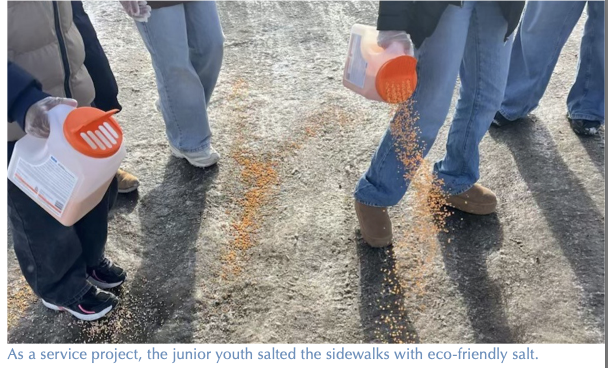
Service projects have also matured. What began as school-based efforts, including garbage cleanups and cards for seniors, expanded into broader neighbourhood collaboration. The animators and junior youth contacted the Community League—a not-for-profit organization representing residents—independently and helped them organize their activities. Now the Community League is considering junior youth projects and events in its annual budget.
Much like the tamarack tree for which the community is named, this process of growth has been both steady and resilient. The tamarack is known for its unique ability to flourish in harsh climates. It is deeply rooted, flexible, and enduring through changing seasons. In much the same way, what began as a fragile seed with just two junior youth developed strong roots in Tamarack’s soil. The programme has grown branches that now shelter many. As new cohorts arise and families become increasingly engaged, the pattern of growth continues, season after season.
Originally published in Bahá’í Canada, Spring/Summer 2026, pp. 26–28.